



Introduction
completed in order to obtain approvals. In reality, it is a critical engineering discipline that directly influences building performance, occupant safety, and long-term operational resilience. For complex developments, effective fire and life safety engineering goes far beyond compliance, providing strategic value throughout the project lifecycle.
This article explores the true scope of fire and life safety engineering and why it should be treated as an integrated engineering function rather than a late-stage approval requirement.
Understanding the Role of Fire & Life Safety Engineering
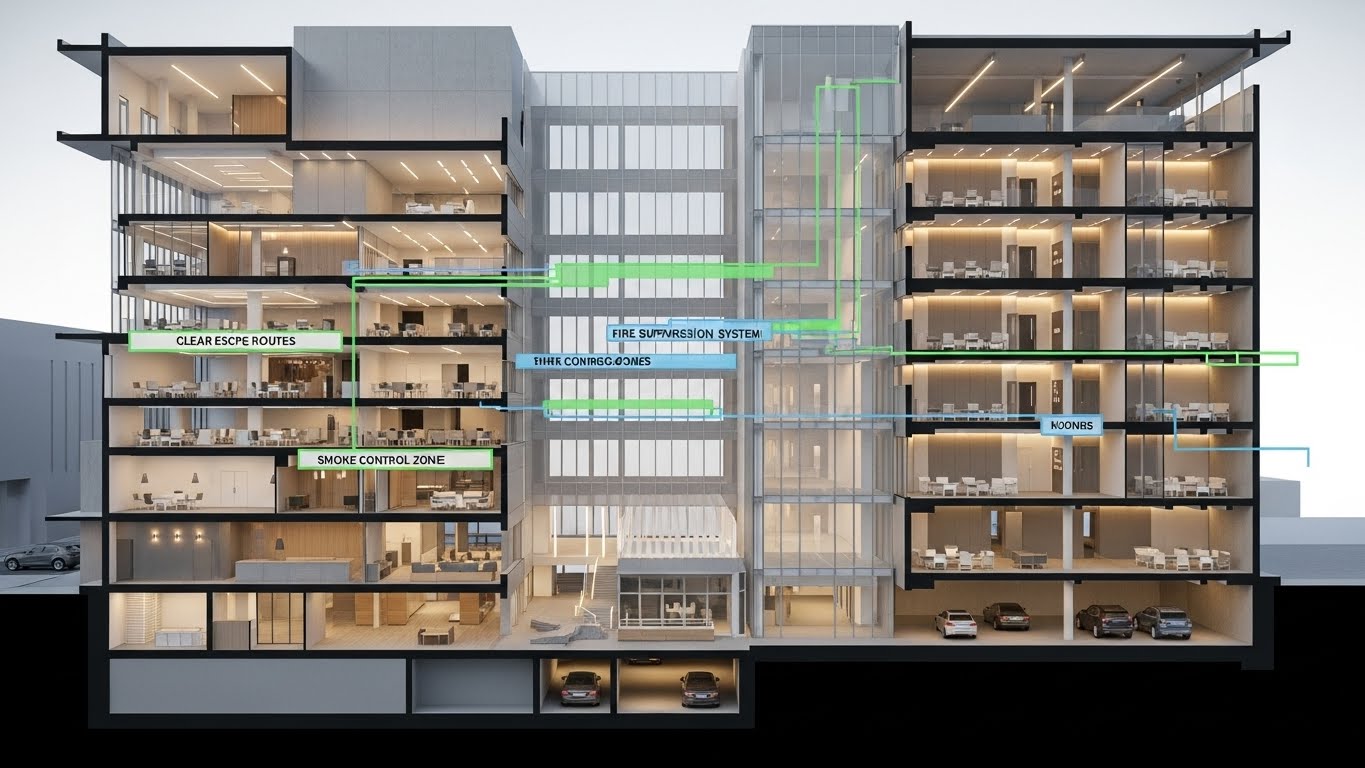
Fire and life safety engineering focuses on protecting occupants, assets, and operations through scientifically grounded design and risk-based analysis. It integrates architecture, structure, mechanical, and electrical systems into a cohesive safety strategy aligned with applicable codes and standards.
Rather than reacting to prescriptive requirements, engineering-led fire safety evaluates:
- Building use and occupancy risks
- Fire growth and smoke behavior
- Evacuation dynamics
- Emergency response accessibility
- System reliability and redundancy
This holistic approach ensures safety solutions are proportionate, effective, and adaptable to real-world conditions.
The Limitations of Prescriptive Compliance
Prescriptive codes are essential benchmarks, but they are not universally applicable to every project. Large-scale, mixed-use, or non-standard developments often present scenarios that cannot be addressed through prescriptive measures alone.
Strict adherence to prescriptive requirements without engineering judgment can result in:
- Over-designed systems
- Conflicting architectural constraints
- Increased construction and operational costs
- Reduced functional efficiency
Fire and life safety engineering provides the flexibility to address these challenges while maintaining or enhancing safety performance.
Performance-Based Engineering as a Strategic Tool
Performance-based design allows engineers to demonstrate safety objectives through analysis, modeling, and scenario evaluation rather than prescriptive assumptions. This approach is particularly valuable for:
- Mega projects
- Infrastructure developments
- Existing building upgrades
- Complex occupancy arrangements
When supported by credible engineering methodologies and authority coordination, performance-based solutions offer safe, efficient, and project-aligned outcomes.
Integration with Authorities and Stakeholders
Effective fire and life safety engineering requires continuous coordination with authorities having jurisdiction, including civil defense and regulatory bodies. Early engagement and transparent documentation streamline approvals and reduce design iterations.
A consultancy-led approach ensures that safety strategies are aligned with both regulatory expectations and project realities.
Conclusion
Fire and life safety engineering is not a checkbox—it is a core engineering discipline that shapes how buildings perform in real emergencies. When applied strategically, it enhances safety, optimizes design, and supports long-term project success.